Repoliny – Thin Ropes for Emergencies
Repoliny – using thin ropes and accessory cord in emergencies in the mountains, summer and winter
The workshops are for people with mountain and climbing experience. We run them in three versions, tailored to the group:
Version for mountain rescuers
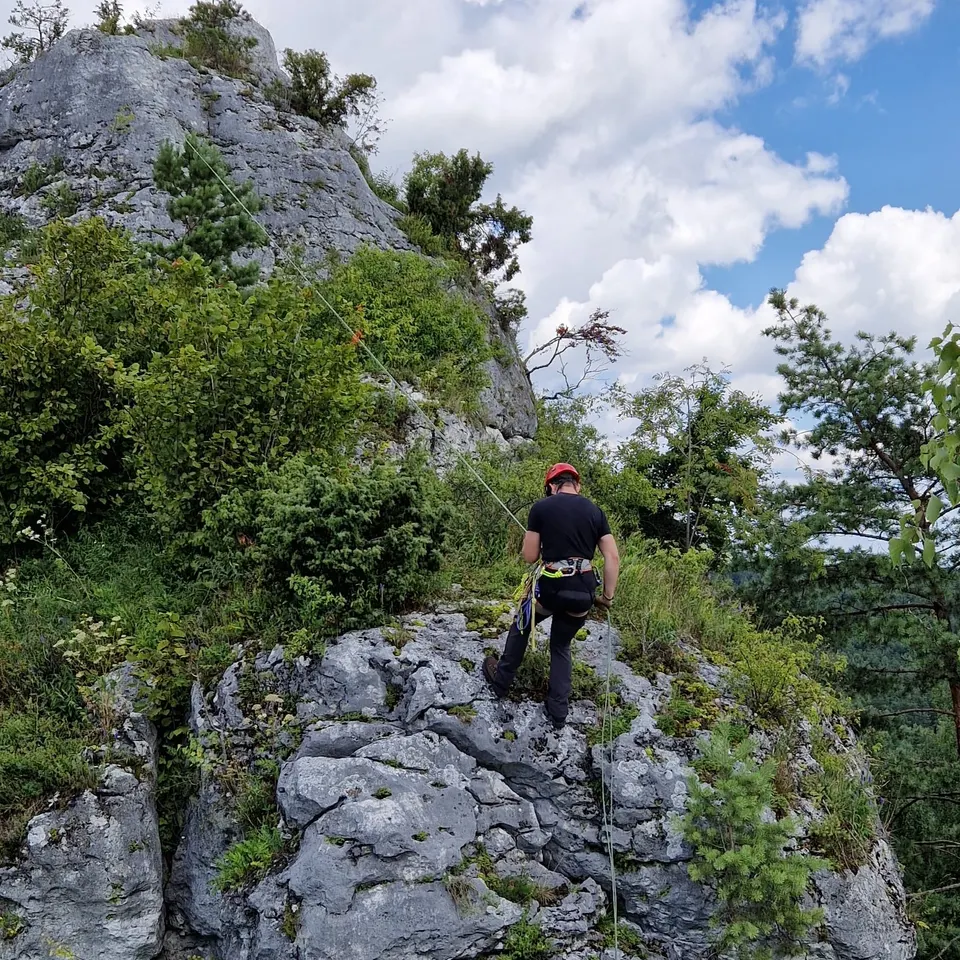
On a long approach to a casualty, every bit of space in the pack counts. A light rope kit leaves room for medical equipment and things to keep the casualty warm. A thin rope and light devices are enough to secure the casualty, lower them or raise them in rock or winter terrain before heavier equipment arrives.
Version for police and military
A rope kit that can be carried on a belt, in a pocket or clipped to a pack without restricting movement. It gives observation teams an escape route, lets you evacuate a VIP or civilians, quickly get over a wall, an embankment or another obstacle, and build improvised anchors.
Version for ski mountaineers, alpinists and climbers
A light emergency kit you can always carry, with no extra weight on the approach. In winter it lets you retreat by abseiling, protect your partner and haul them out of a crevasse. In summer it helps you deal with unexpected difficulties in unfamiliar mountains and makes self-rescue easier, also on a via ferrata.
Topics covered:
- What is a repolina?
- How thin can the rope be and still be safe, while weighing as little as possible in your pack?
- Aramid vs. Dyneema: how do these materials differ and what are their limits?
- Why is polyester sometimes better than polyamide?
- Which rope construction works best?
- Does a rope always need a core?
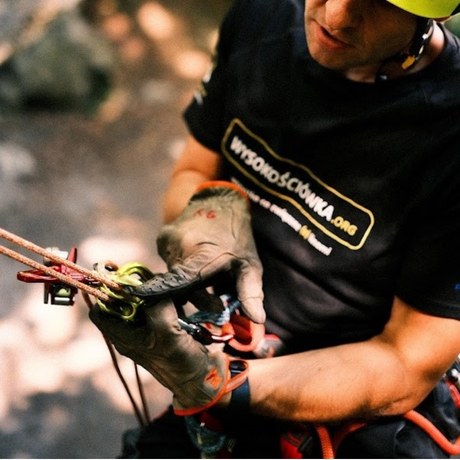
- Which devices can be used on such thin ropes? Will rope clamps damage them?
- Can such thin ropes be used for belaying?
- Abseiling on a single and a double strand.
- Haul systems.
- Knots for thin ropes.
- A universal, year-round “light & fast” mountain emergency kit: does it exist, and why yes?
Course details
Duration
3 days
Group size
6 people
Venue
the Kraków-Częstochowa Upland (Polish Jura) or other suitable terrain
Price
PLN 2,100 per person
Group price
4 or more people, PLN 1,800 per person
Price includes
instructor supervision, equipment and issue of the certificate.