ITRA Confined Space Rescue
ITRA Confined Space RescueThe international standard for confined space rescue training
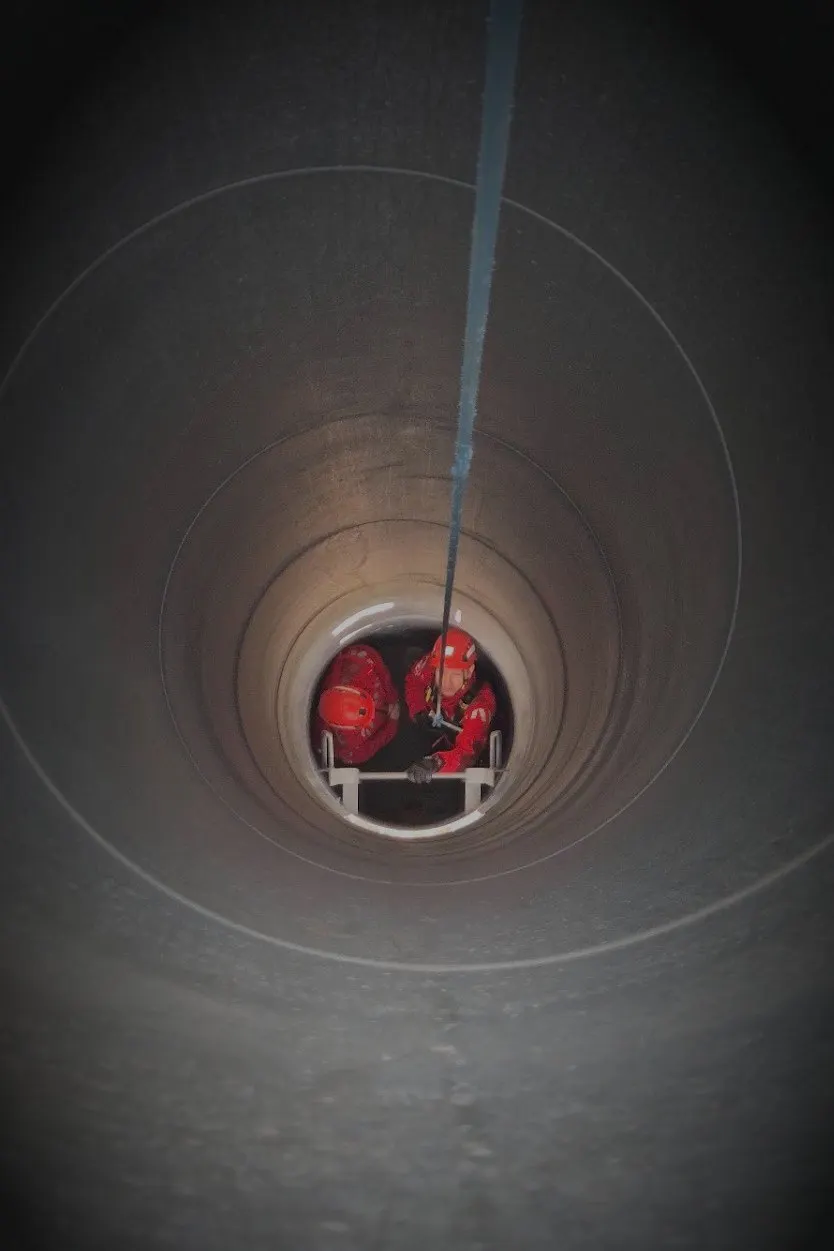
ITRA Confined Space Rescue is a course in rescue from confined spaces: tanks, wells, sewers, silos, chambers and the inside of equipment. It is for rescue services, company rescue teams and firms whose people work in such places. You learn how to reach the casualty and get them out without any of the rescuers becoming the next casualty. After the course you can provide standby rescue for work in confined spaces.
In a confined space the greatest hazard is usually the air. It may lack oxygen or contain toxic or explosive gases, and often you can neither see nor smell this. According to the US National Institute for Occupational Safety and Health (NIOSH), more than 60% of confined space fatalities are people who went in to help. That is why the course starts with recognising hazards and monitoring the atmosphere, not with ropes.
The course ends with an exam by an independent ITRA assessor. You get the certificate only if you pass the exam. Attending the course is not enough.
At a glance
- LevelsL1, L2, L3 and L1 + L2 together
- L1 Responder2 days, PLN 2,800 per person
- L2 Technician4 days, PLN 4,400 per person
- L3 Advanced5 days, PLN 5,200 per person
- L1 + L25 days, PLN 5,200 per person
- DocumentITRA certificate valid for 3 years
- LanguagePolish; English on request
We train to the current international ITRA Confined Space Rescue programme. At the end of the course, the exam is run by an independent ITRA assessor.
Who is it for
The course is for those who have to get a person out of a place you enter through a hatch or a narrow opening. Above all for State and Volunteer Fire Service firefighters (PSP and OSP), company rescue teams and industrial fire brigades, and for firms whose workers enter tanks, sewers and wells: in industry, energy, water and sewerage, wastewater treatment plants and agriculture. It is also useful for IRATA rope access technicians and rope rescuers who work or rescue in confined spaces. At L1 you need no confined space rescue experience.
- State and Volunteer Fire Service
- company rescue teams
- industry and energy
- water and sewerage
- agriculture and silos
- rope access technicians
What is a confined space
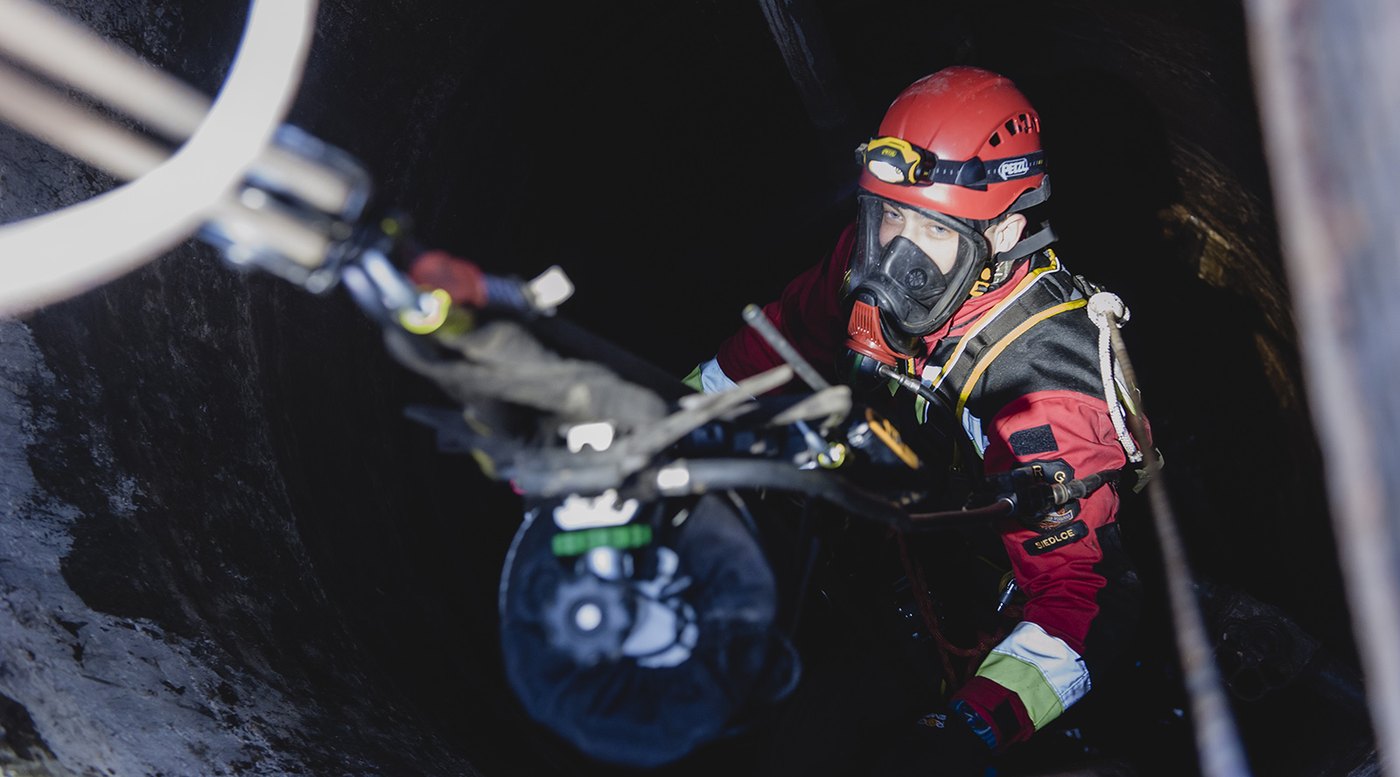
It is a place you can enter and work in, but which is not designed for people to stay in. You get in and out through a hatch, a narrow opening or by ladder, so evacuation takes longer than usual. Inside there is often no natural ventilation, so gases and vapours build up and there may be too little oxygen.
- wells and sewer manholes
- cesspits and slurry tanks
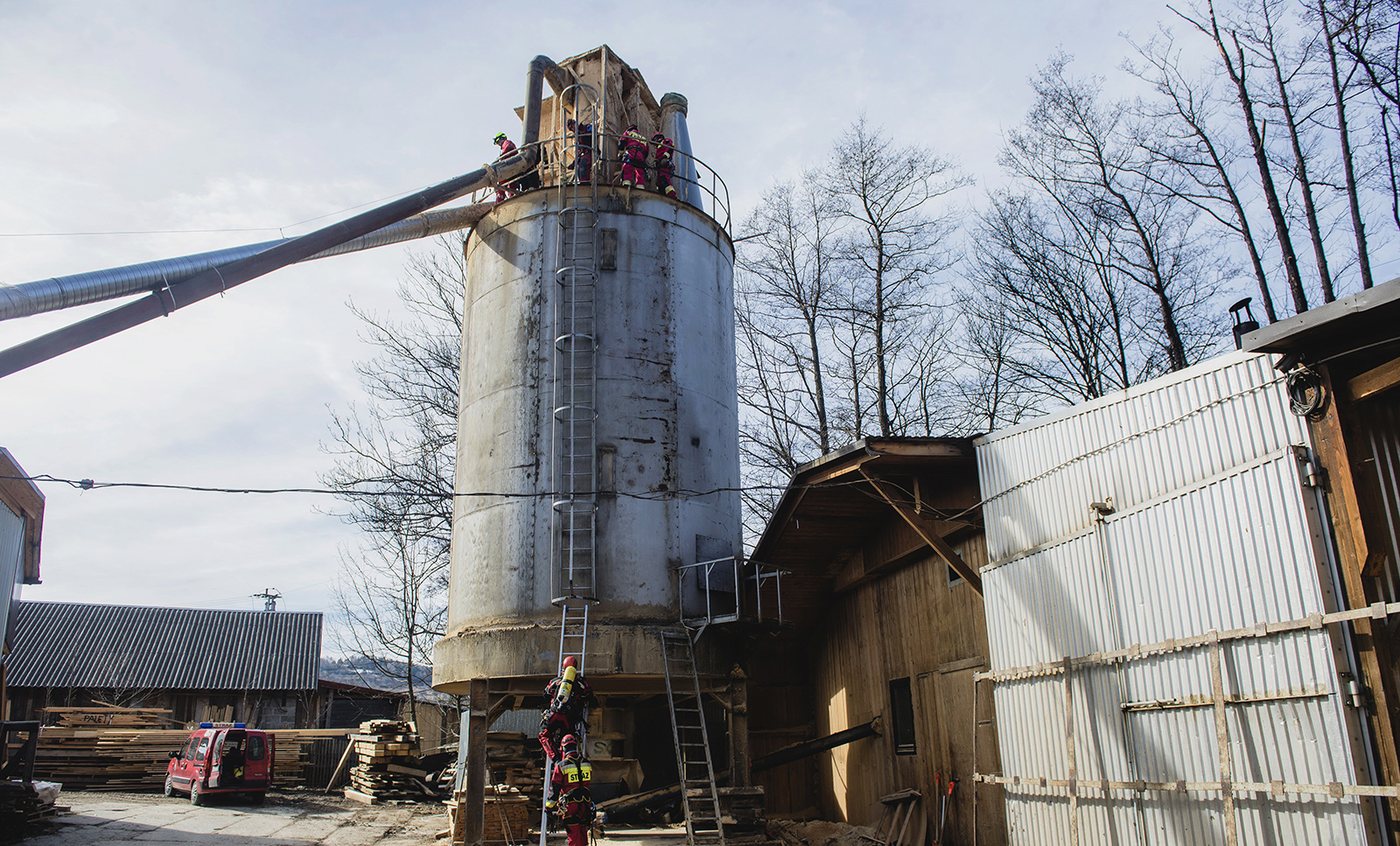
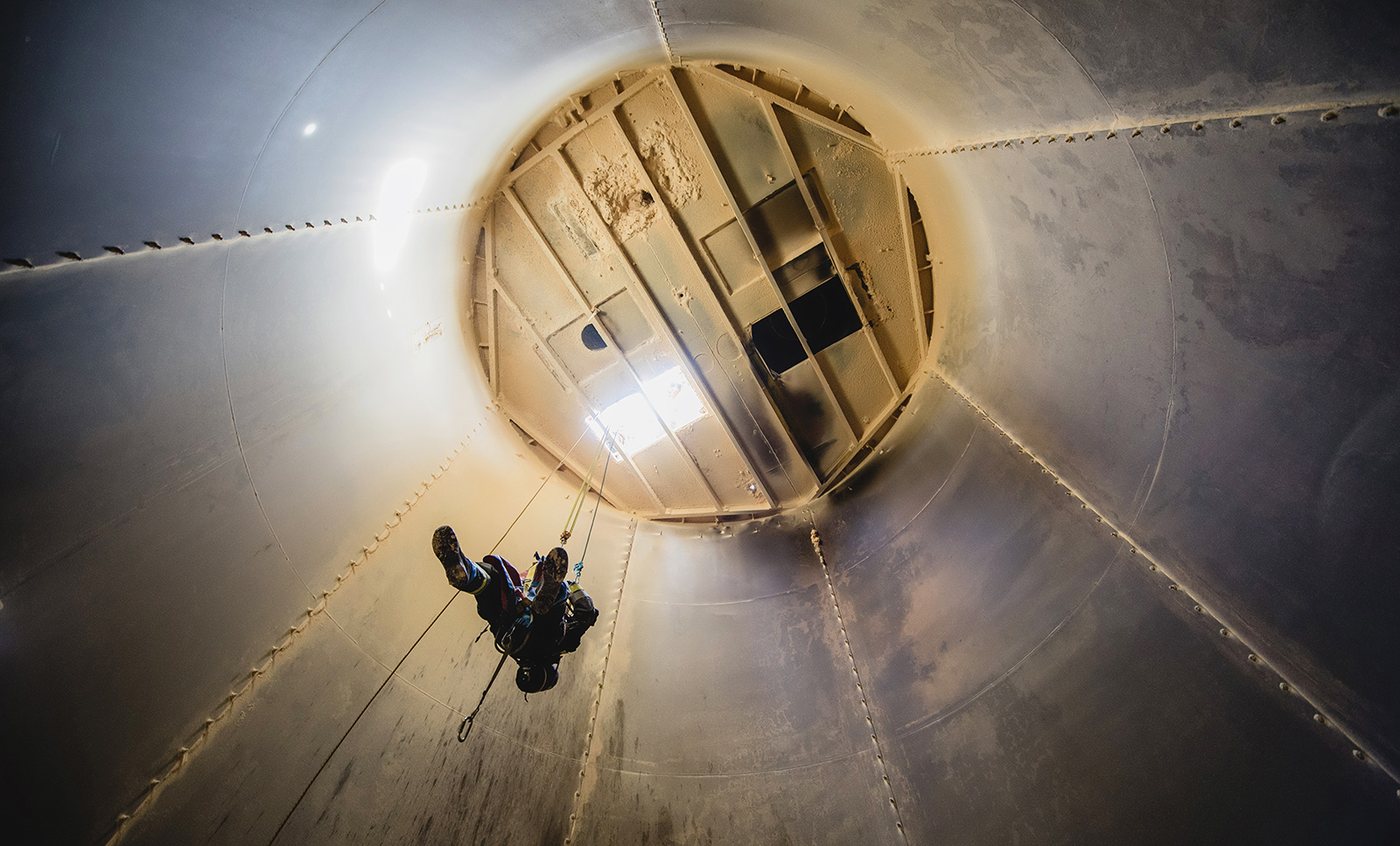
- silos and hoppers
- tanks and tankers
- boilers and the inside of machines
- sewers and service tunnels
- valve and water meter chambers
- ship holds and tanks
A place that is not normally a confined space can also become one, for example a deep trench in which carbon dioxide or another gas heavier than air collects.
How accidents happen
Accounts of confined space accidents are remarkably similar. A worker goes down into a manhole, a tank or a cesspit and after a moment stops responding. A colleague from above goes down to help and also loses consciousness. Sometimes a third person goes down too. Nobody measured the atmosphere, nobody was attached to a rope, and there was no equipment at the top to get anyone out.
At a high concentration of hydrogen sulphide or with very little oxygen, a person loses consciousness after a few breaths. At higher concentrations hydrogen sulphide paralyses the sense of smell, so the smell of rotten eggs suddenly disappears even though the gas is still there. Carbon dioxide and nitrogen have no smell to warn you.
That is why on the course you first learn when not to go in and how to rescue from outside. Going inside is the next step, always with monitoring, a belay and a plan.
What is ITRA
ITRA (International Technical Rescue Association) is an international non-profit organisation founded in 2018 by rescue instructors. It sets common requirements for rescuers in several separate disciplines, including confined space rescue, rope rescue and swiftwater rescue. Each discipline has its own programme, its own levels and its own exam.
Attending the course does not give you a certificate. You have to pass an exam at which an independent ITRA assessor checks everything the programme requires at your level. Once you pass, ITRA enters you in its database, and the certificate is valid for 3 years.
The ITRA certificate is international. How the course relates to Polish law is described below.
Confined spaces in Polish law
The Polish Regulation on general health and safety at work classes work in tanks, sewers, wells, sewer manholes, the inside of technical equipment and other confined spaces as particularly hazardous work (§ 80–90). Among other things it requires:
- a written permit for work in a tank and constant supervision,
- testing the air for oxygen and for gases and vapours of hazardous substances immediately before entry,
- a belay by at least one person outside, who is in constant contact with the worker and can quickly call for help,
- a safety harness with a line, a helmet, protective clothing and respiratory protective equipment, also for the person providing the belay,
- the ability to give first aid immediately.
Work without respiratory protection is allowed only when there is at least 18% oxygen and no harmful substances above the Polish occupational exposure limits (NDS), and no risk that they will appear. The decision is made by the person supervising the workers.
The law therefore requires the belay and readiness to rescue to be in place before anyone goes inside. The ITRA Confined Space Rescue course teaches how to provide this in practice: from the person belaying at the hatch at L1 to a team that enters an atmosphere immediately dangerous to life at L3.
Firefighters operate under the rules of the Polish National Firefighting and Rescue System (KSRG). The rules for organising rope rescue in the KSRG also cover wells, tunnels and adits, among other things. We describe them on the KSRG rules page.
Standby rescue
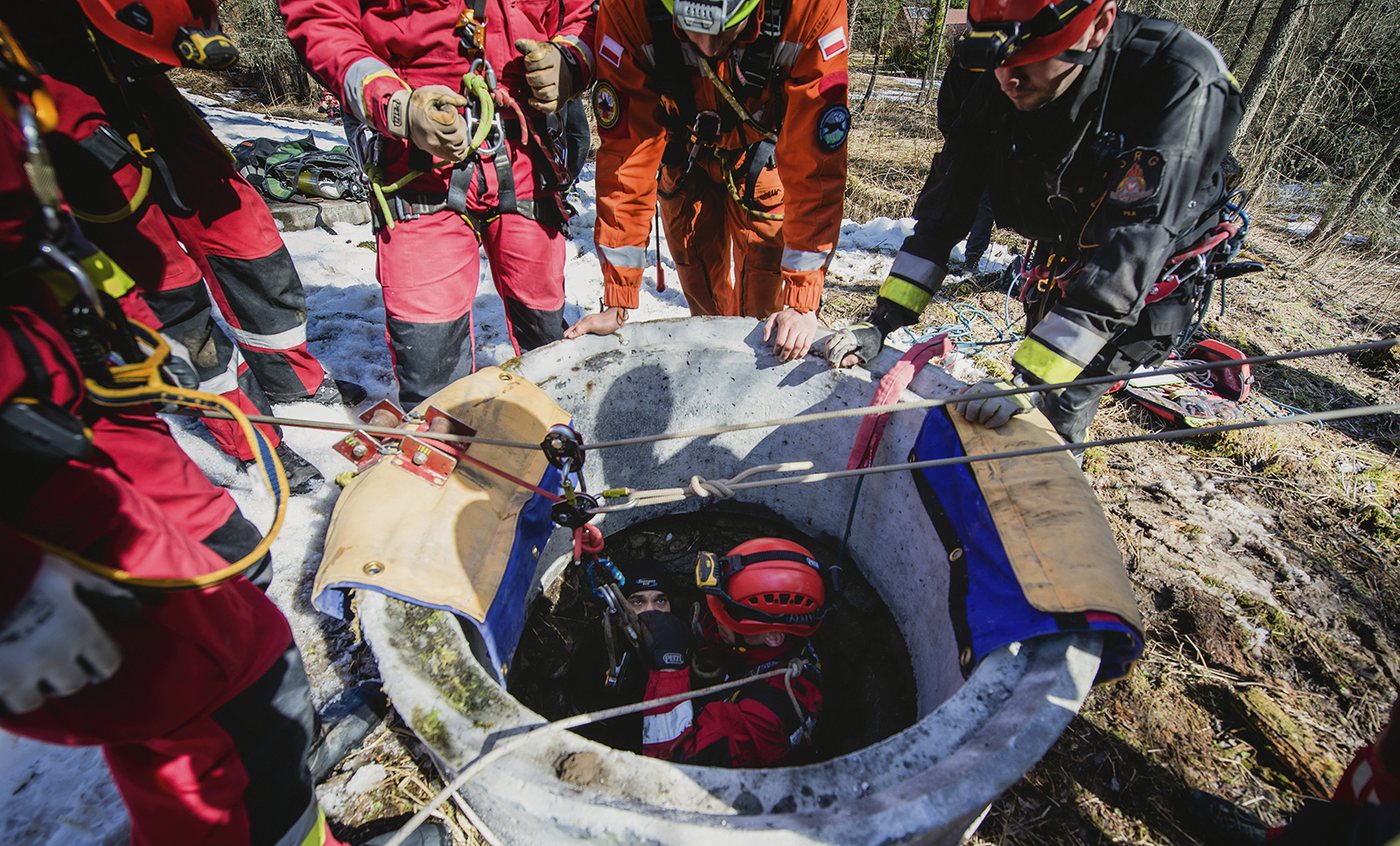
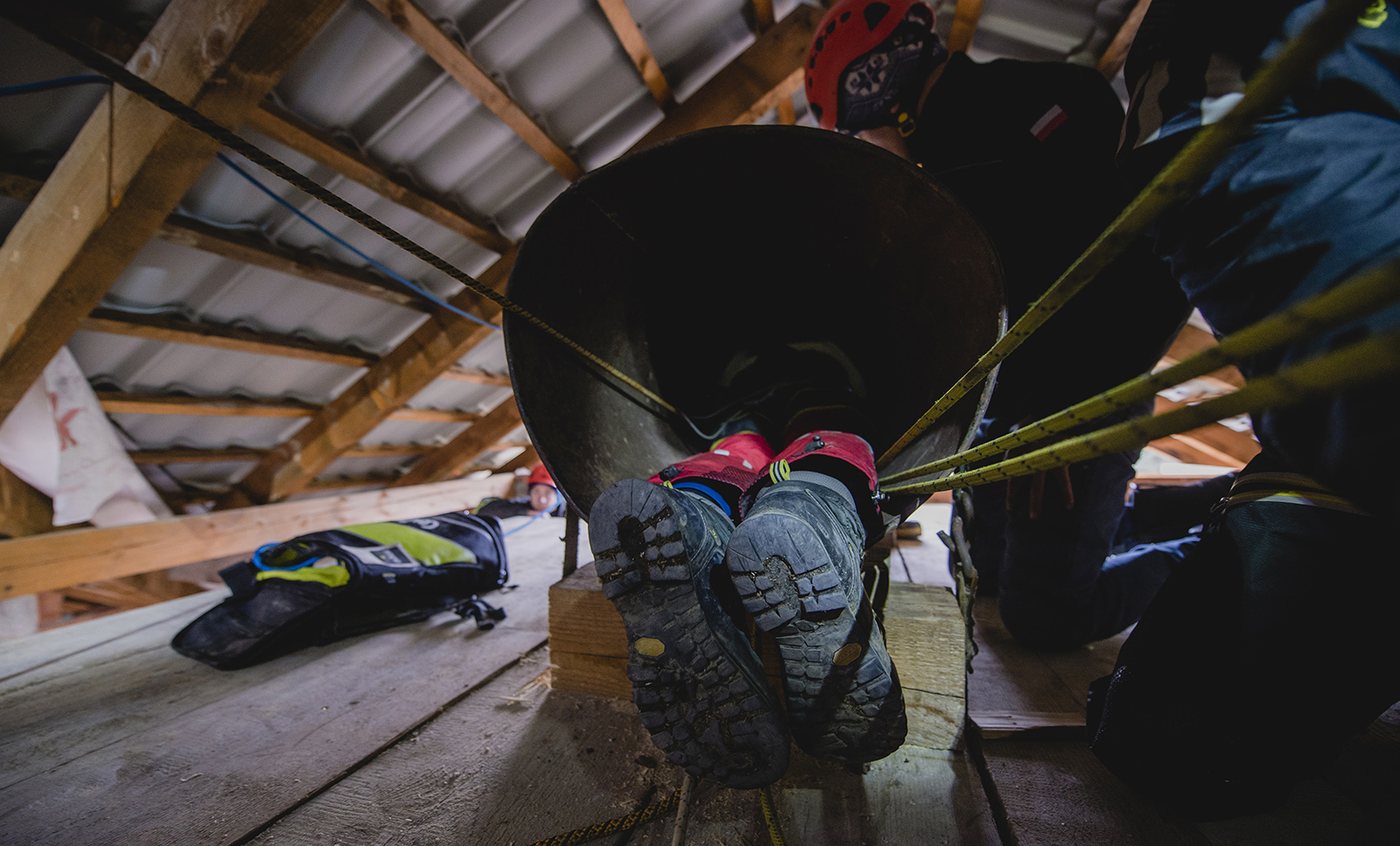
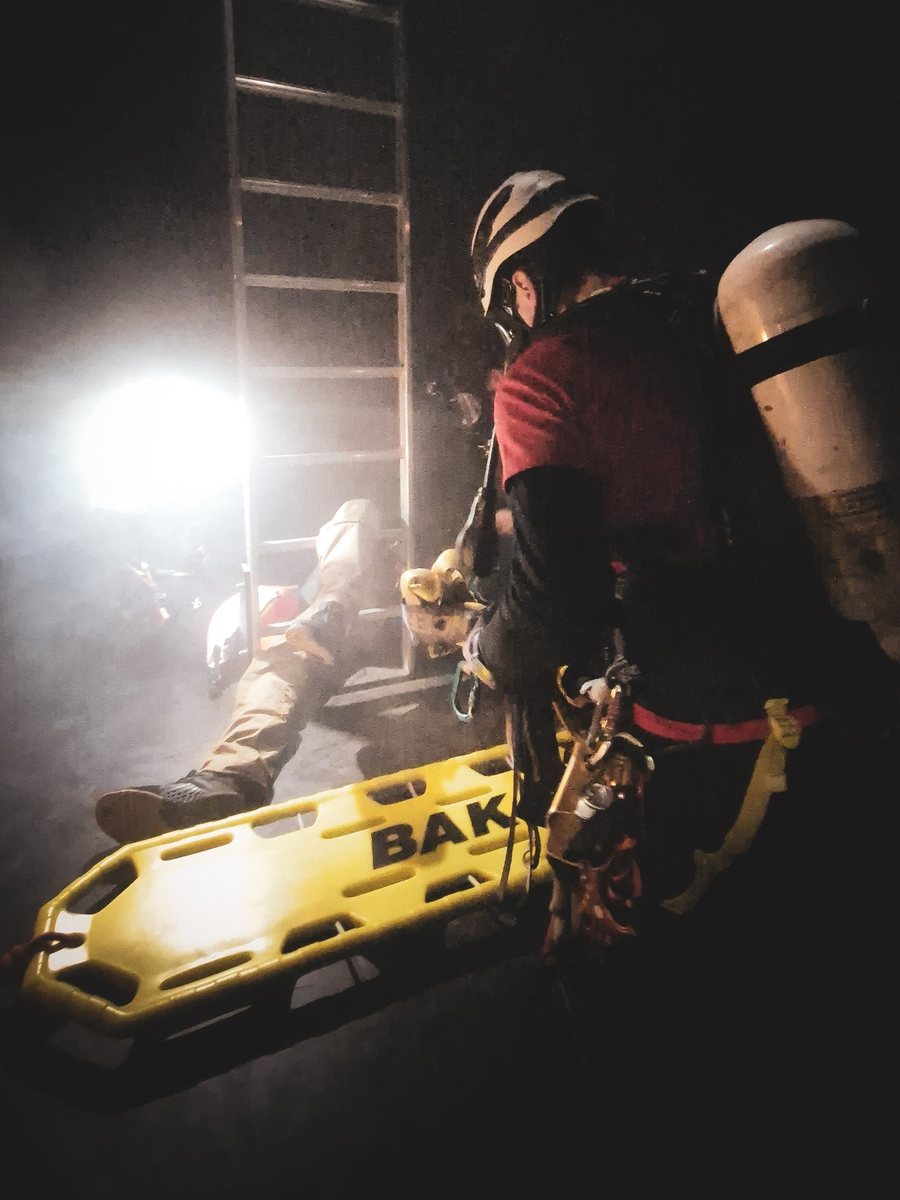
After the ITRA Confined Space Rescue course you can provide standby rescue. You stand with a team and equipment at the hatch for the whole time work is going on in the confined space, ready to rescue straight away. The scope depends on the level: at L1 you belay the entry and rescue from outside, at L2 you also rescue with entry into the space, and at L3 in breathing apparatus, in an atmosphere immediately dangerous to life or health.
Not all courses are equal
ITRA sets the programme and what a rescuer must show at the exam for each level. What the course itself looks like depends on the school and the instructor. The certificate confirms a passed exam. How you cope at a real hatch depends on who taught you and how.
We treat ITRA Confined Space Rescue as a rescue course, after which you are expected to save people. A tripod and a winch are only tools. Whether a rescue succeeds is decided by what you cannot see: the atmosphere, the plan, communication and the decision whether to go in at all.
Our instructors are serving rescuers and firefighters who keep training themselves, in Poland and abroad.
We stick to a simple rule:
Anyone who thinks they no longer need training because they know everything should not be training others.
ITRA Confined Space Rescue levels
L1
Responder. You work in the team at the hatch, outside the space. You recognise hazards, monitor the atmosphere and belay the person working inside. You get the casualty out without entering the space or with a simple entry. You need no rescue experience.
L2
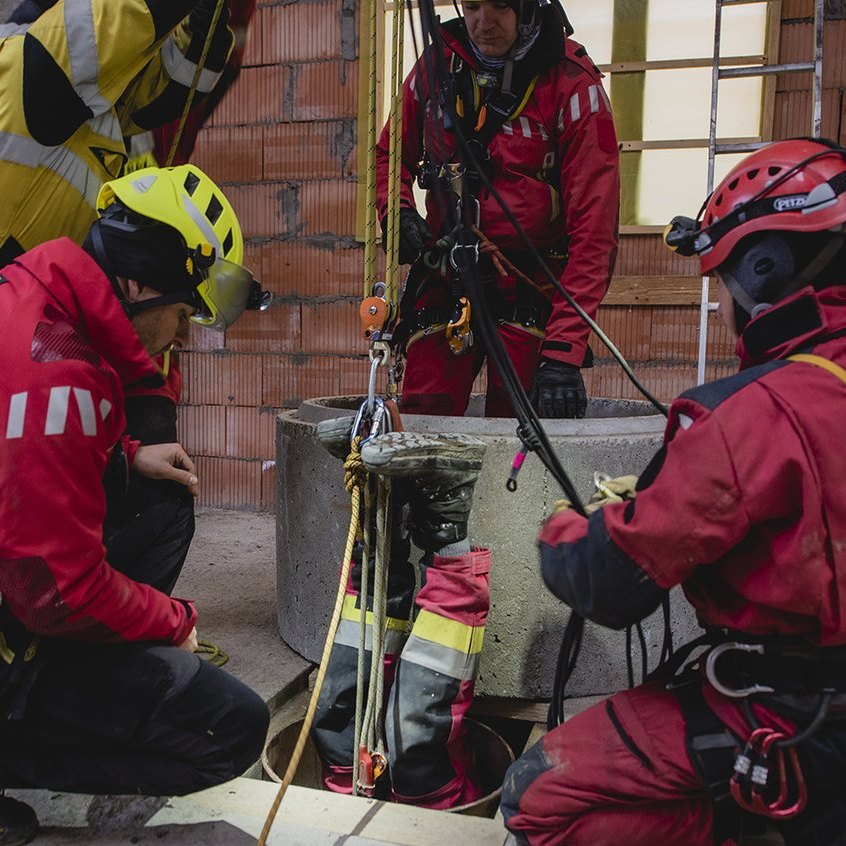
Technician. You go inside when the atmosphere is not immediately dangerous to life or health. You search for the casualty, package them for evacuation and get them out as a team using rope systems. You lead the entry and work within sight of the person belaying. You come to L2 with an ITRA L1 certificate or an equivalent certificate from another confined space rescue course.
L3
Advanced. You operate where the atmosphere is immediately dangerous to life or health, in self-contained and airline breathing apparatus. You get through tight openings, work out of sight of the person belaying and evacuate the casualty vertically and horizontally. You run complex, long operations and lead the team. You come to L3 with ITRA L1 and L2 certificates or equivalent certificates from other confined space rescue courses.
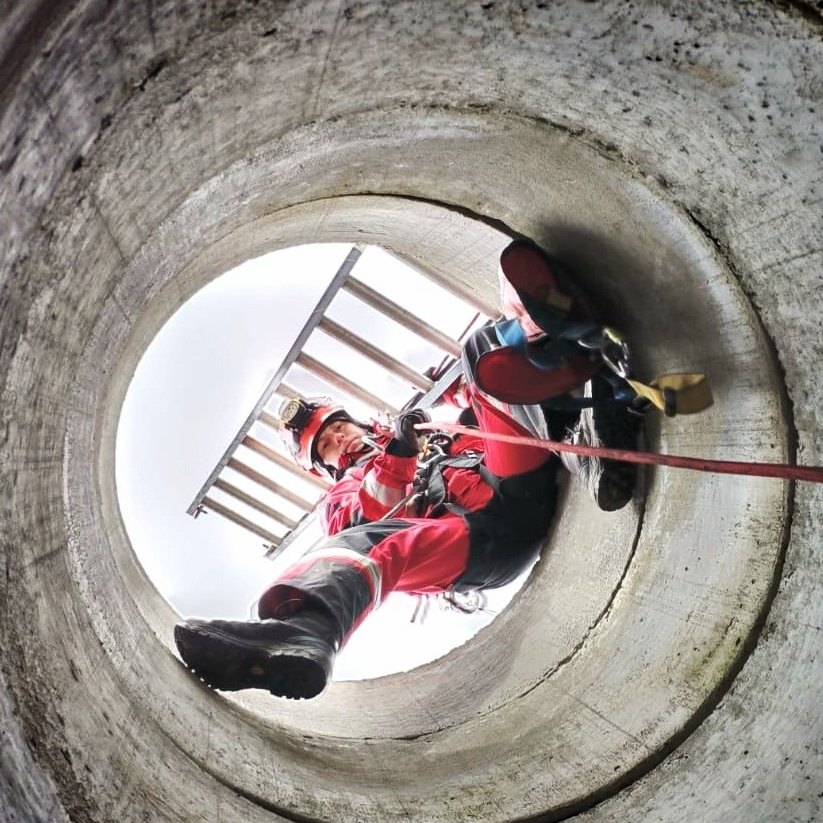
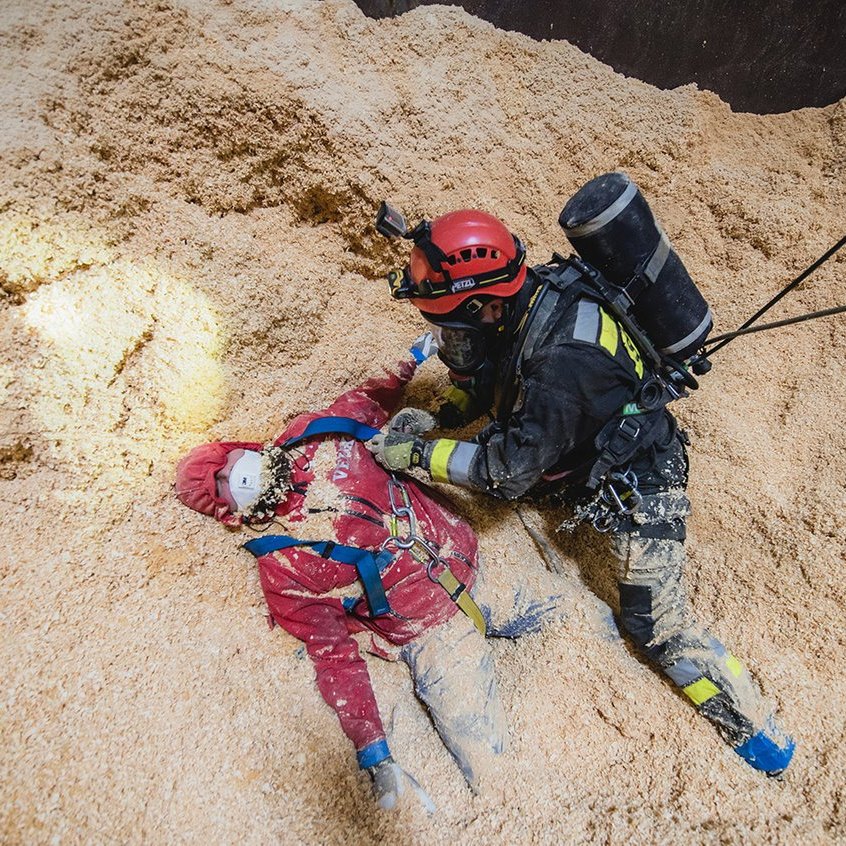
Starting from scratch and want to rescue with entry into the space straight away? You can do L1 and L2 together in one L1 + L2 course.
Your path in ITRA
- L1 course and exam with no rescue experience
- L2 course and exam with an L1 certificate
- Or L1 + L2 straight away in one course with an exam
- L3 course and exam with L1 and L2 certificates
- Renewal every 3 years, with an exam at your level
What you will learn
At L1 you learn the basics that every confined space rescue starts with:
- what a confined space is and its hazards: too little or too much oxygen, toxic and explosive gases, flooding, engulfment, utilities and energy
- types of rescue: self-rescue, non-entry rescue and entry rescue
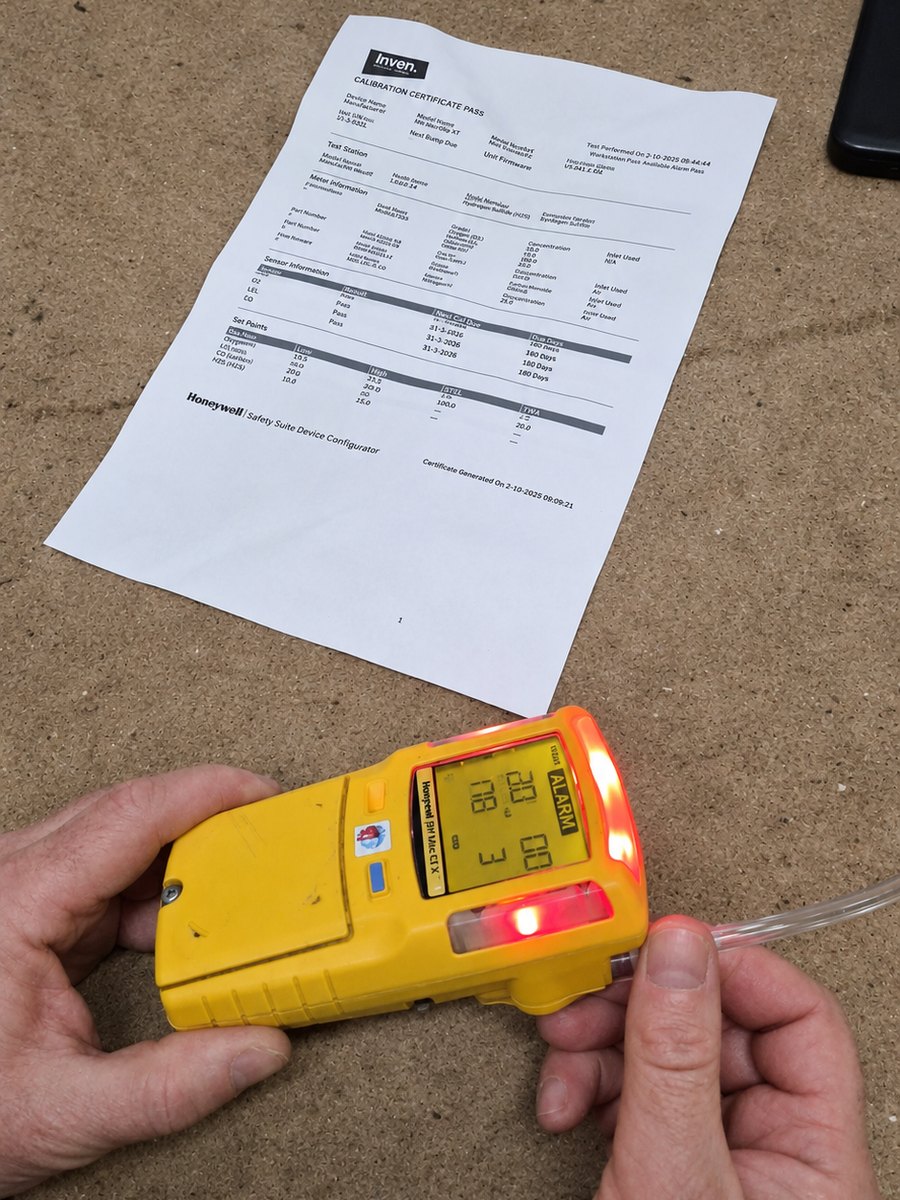
- monitoring the atmosphere with a multi-gas detector before entry and during operations
- ventilating the space
- isolating and securing utilities and energy sources
- the work of the person belaying at the entry, communication and signals
- personal protective equipment and the basics of respiratory protection
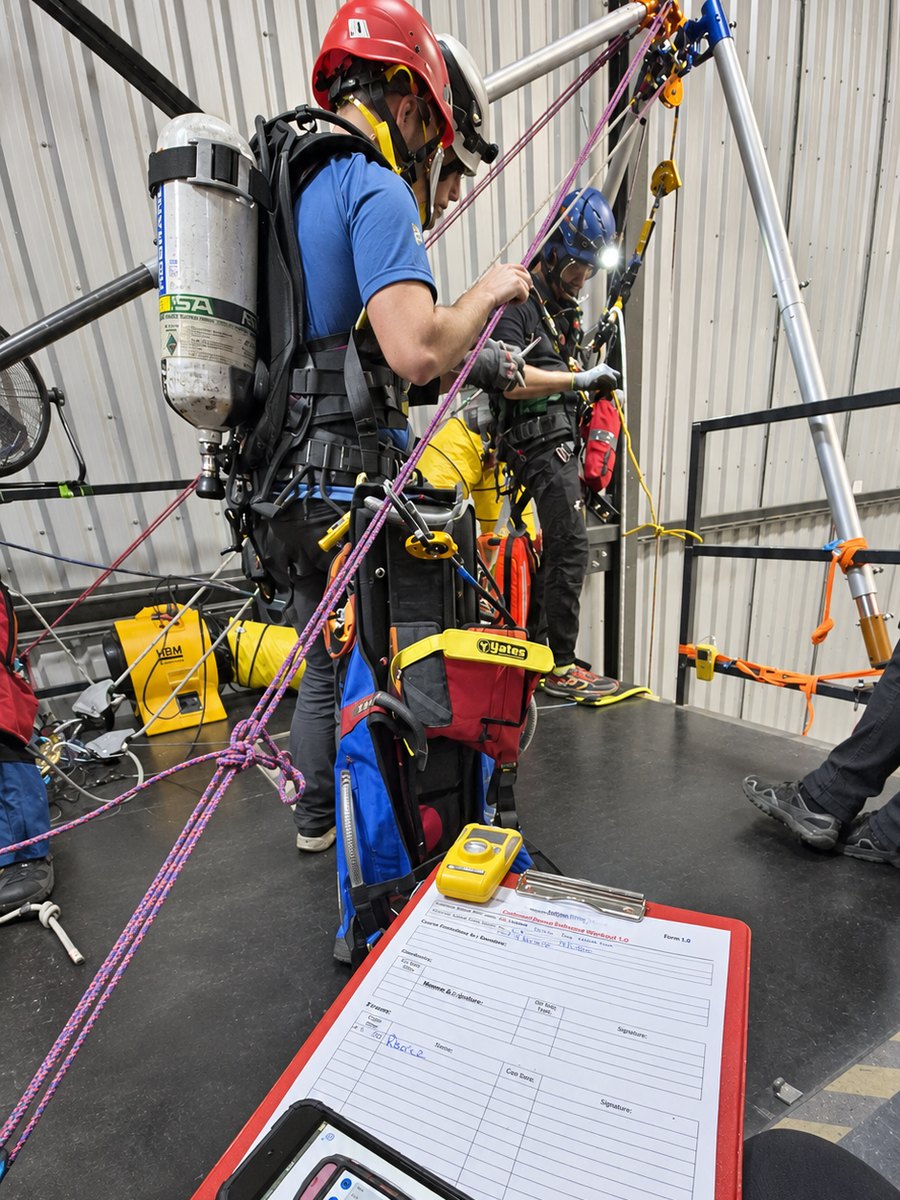
- the tripod and evacuation devices, setting up the anchor over the hatch
- getting the casualty out without entering the space and with a simple entry
At L2 you go inside. You learn to size up a specific space and make a rescue plan for it, to search for the casualty, assess their condition and package them for vertical and horizontal evacuation. You build rope systems for lowering and raising, anchors and artificial high anchor or redirect points over the hatch. You work within sight of the person belaying and get to know air-fed breathing apparatus.
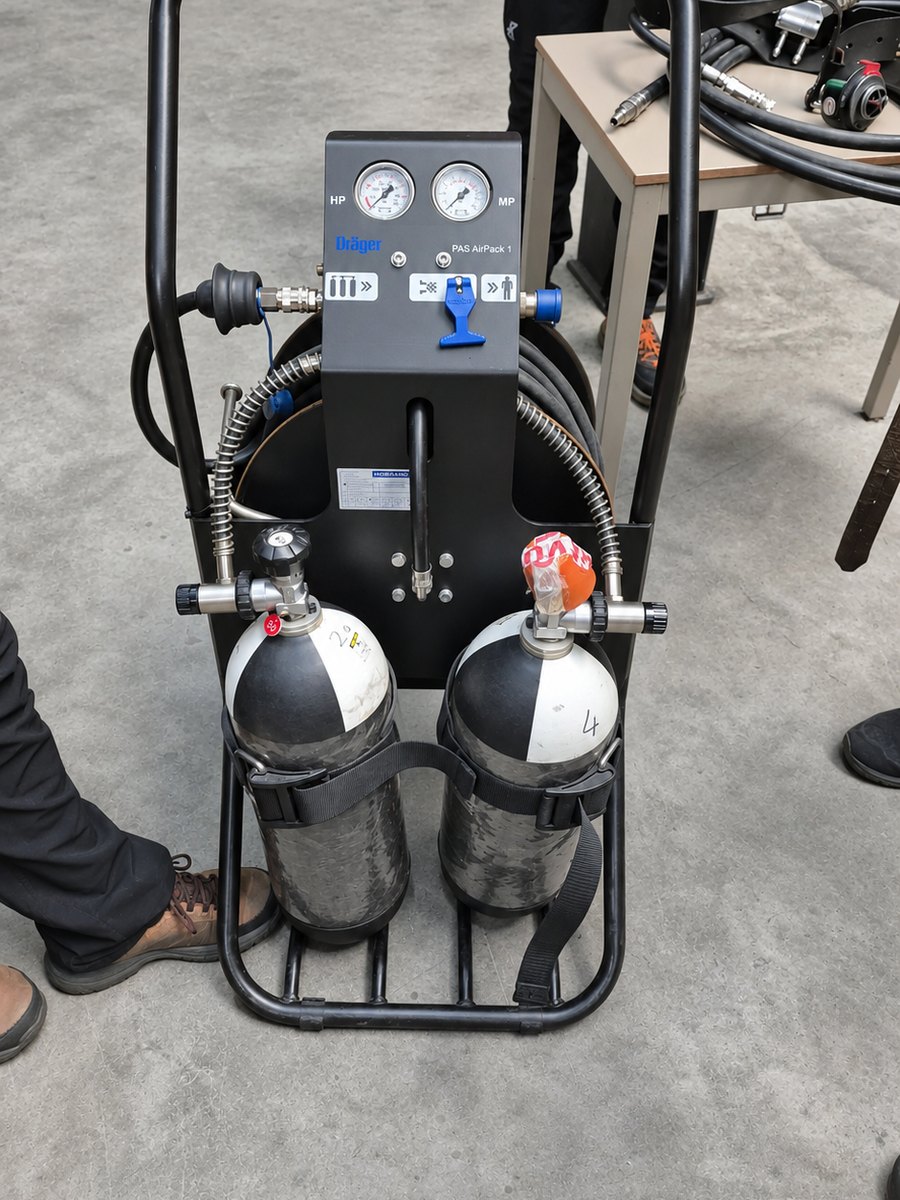
At L3 you operate in an atmosphere immediately dangerous to life or health. You add self-contained and airline breathing apparatus supplied with compressed air, air management, tight entries and moving in a restricted space, horizontal and vertical evacuation in breathing apparatus, systems built inside the space and multi-point anchors. You work out of sight of the person belaying, in complex and long operations. At this level you also add leading the team and planning the operation.
You practise everything in scenarios that resemble real operations: as a team, with a casualty and under time pressure. The atmosphere during sessions is always safe, and hazards are simulated.
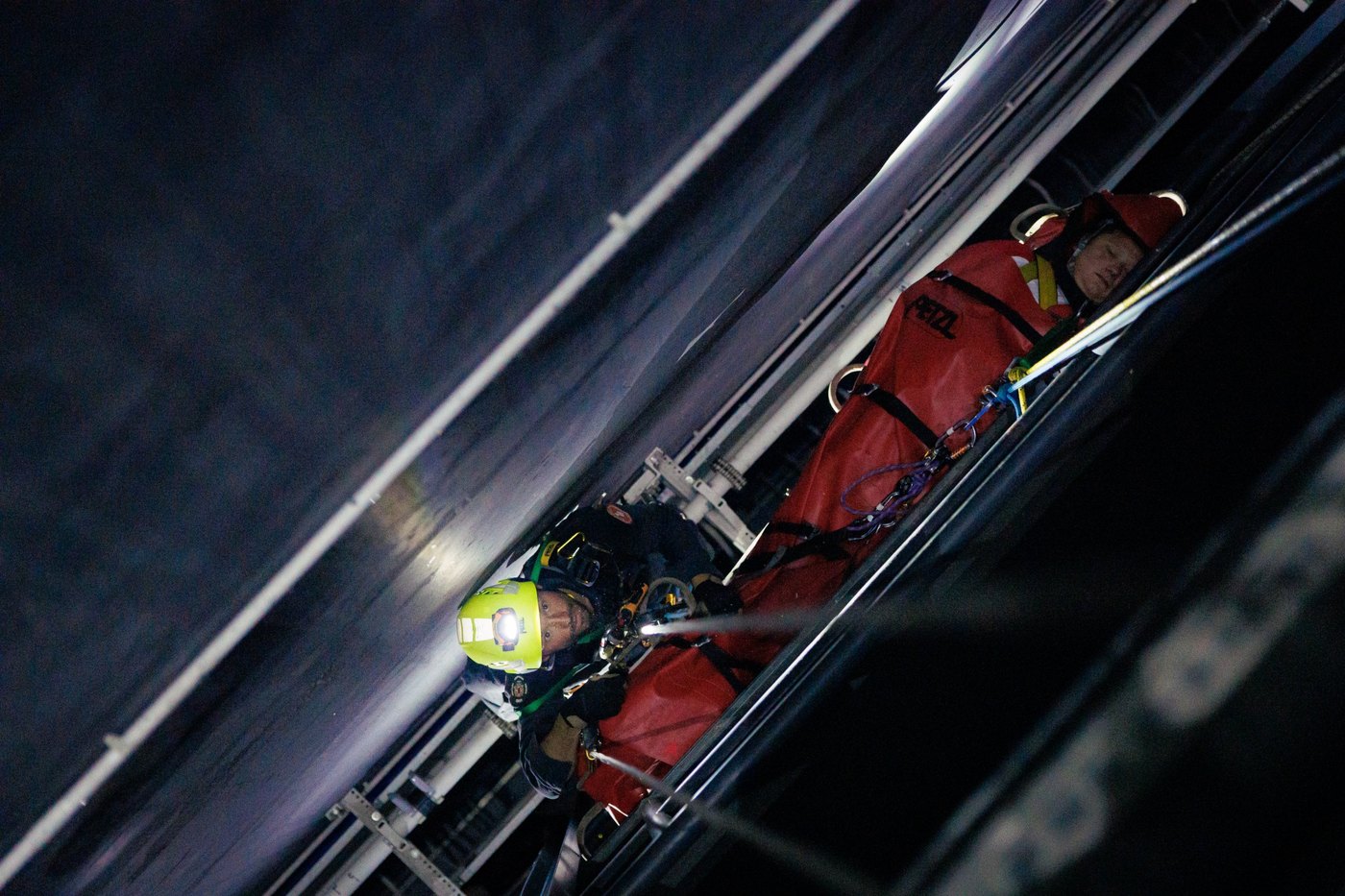
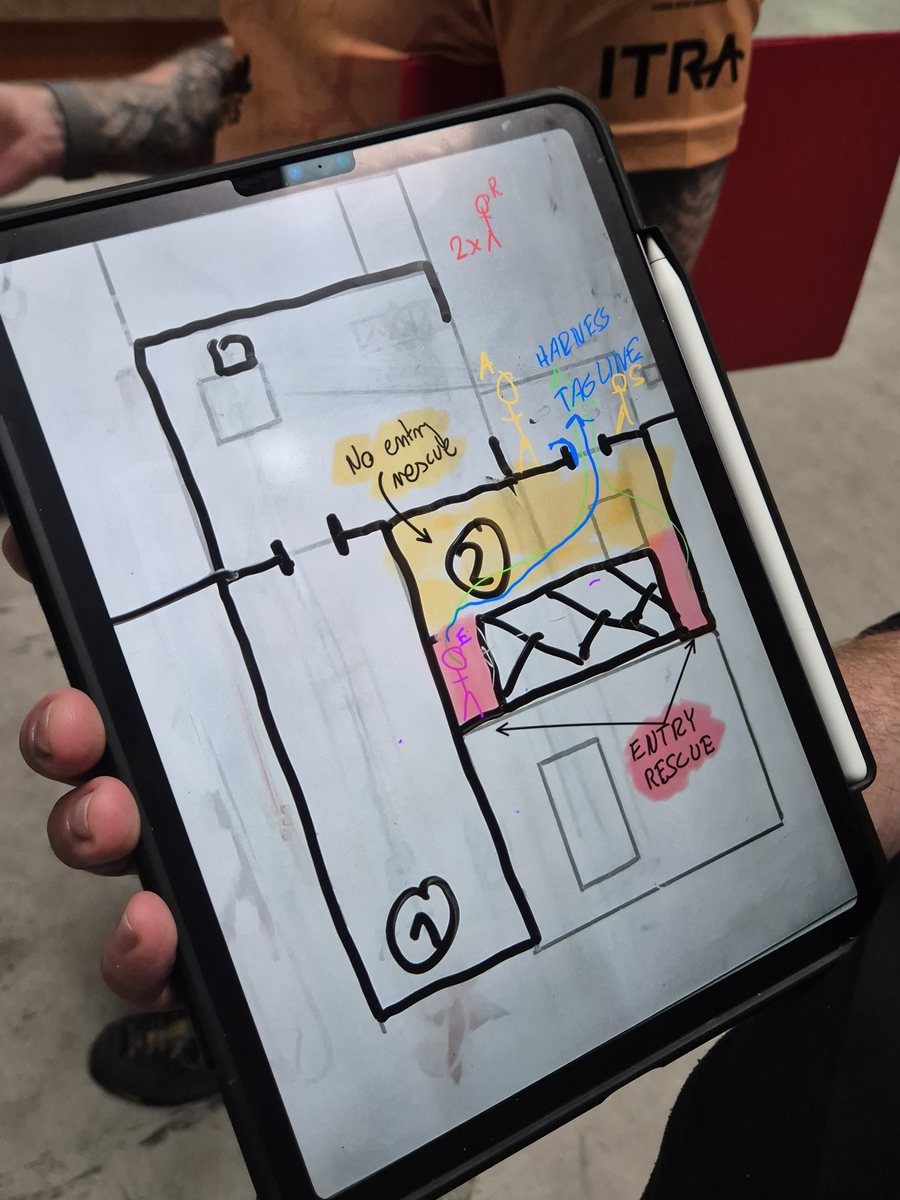
How the course runs
Training days
Theory and exercises following the ITRA Confined Space Rescue programme for your level: vertical and horizontal entries, getting through partitions and obstacles, level changes, operations within and out of sight. Including the exam, the whole course takes: L1 2 days, L2 4 days, L3 and L1 + L2 5 days each.
Last day
The exam. You will be assessed by an independent ITRA assessor.
The exam step by step
- Theory. On the day of the exam you complete a knowledge test for your level in the presence of the assessor. On the L1 + L2 course you complete a separate test for each level.
- Practical. The assessor checks every element of the programme: hazard recognition, atmospheric monitoring, building systems and working in the team with the casualty.
- Result. Once you pass, ITRA enters you in its database.
- Certificate. ITRA sends you an electronic certificate by e-mail. It is valid for 3 years. The exam and exam fees are included in the course price.
We run the course to the ITRA guidelines in force on the day of training. It is worth reading them on the ITRA website before the course.
Renewal every 3 years
The ITRA certificate is valid for 3 years. To extend it, you retake the exam at your level. Returning trainees get a 15% discount with us.
Confined Space or Rope Rescue
These are two separate ITRA disciplines, with separate programmes, levels and exams. ITRA Rope Rescue teaches rescue on ropes on low-angle terrain, in vertical terrain and on Tyroleans. ITRA Confined Space Rescue teaches rescue from places where the greatest hazards are the atmosphere and a tight entry, and ropes are only one of the tools. We also run the ITRA Rope Rescue course.
Requirements
- minimum age 18,
- good physical fitness: you work in protective equipment, in tight spaces, and get the casualty out with your team,
- no medical contraindications to work at height, in tight spaces and in breathing apparatus; tell the instructor about any health problems before the course,
- for tasks in breathing apparatus, a clean-shaven face where the mask seals, because facial hair prevents a proper seal,
- for L2: an ITRA L1 certificate, and for L3: ITRA L1 and L2 certificates (or equivalent certificates from other confined space rescue courses).
You do not need to be a serving rescuer or hold the Polish qualified first aid certificate (KPP). In our view both help you be a professional rescuer. After all, this is a rescue course.
Why train with us
ITRA Confined Space instructor
The course is run by an ITRA Confined Space Rescue instructor.
Exam included
The exam with an independent ITRA assessor and the exam fees are included in the course price.
L1 + L2 in one course
From zero to rescue with entry into the space in 5 days, including the exam.
Instructors who work in the field
We provide safety cover for hazardous projects and train firefighters, rescuers and uniformed services.
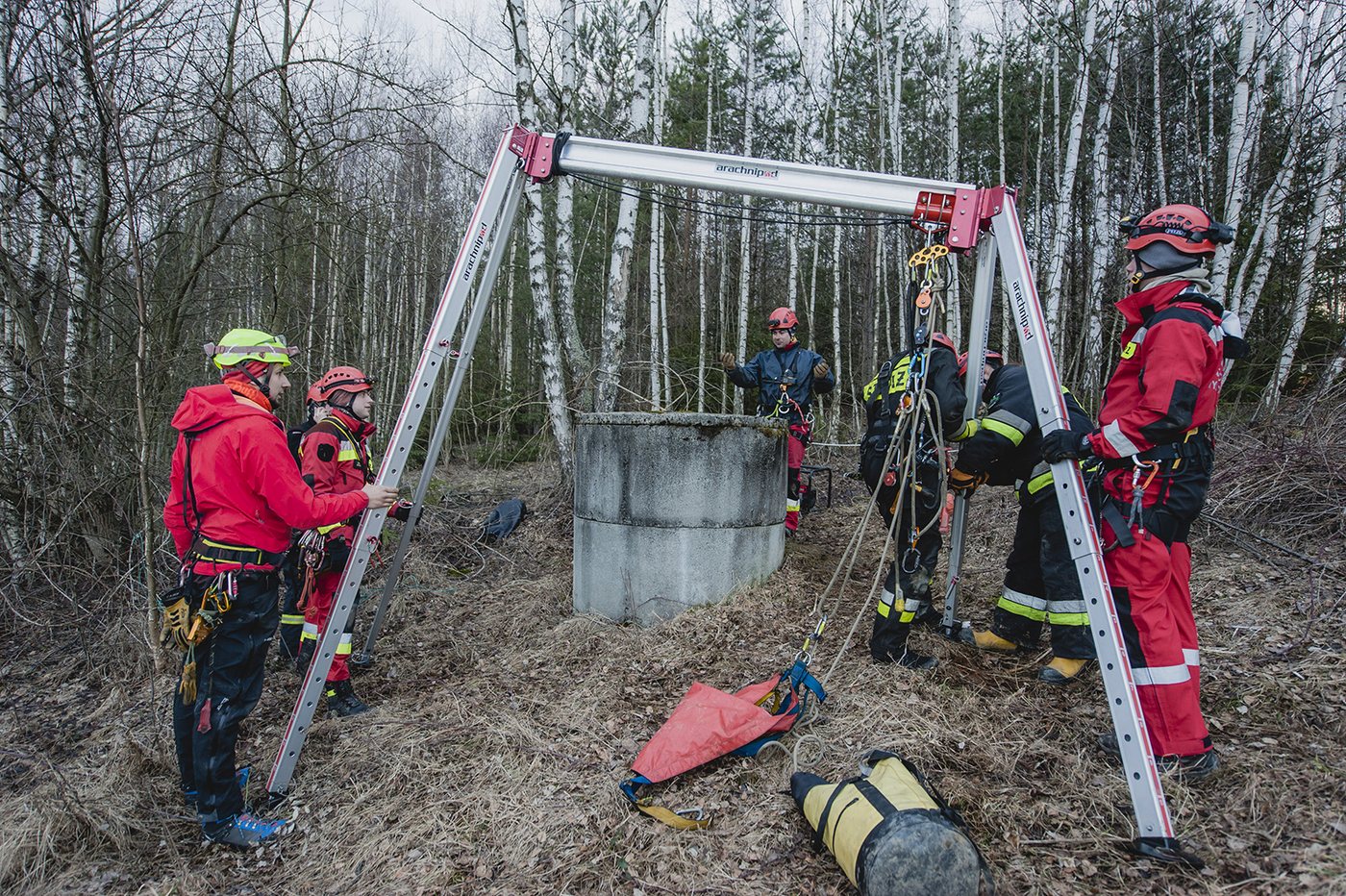
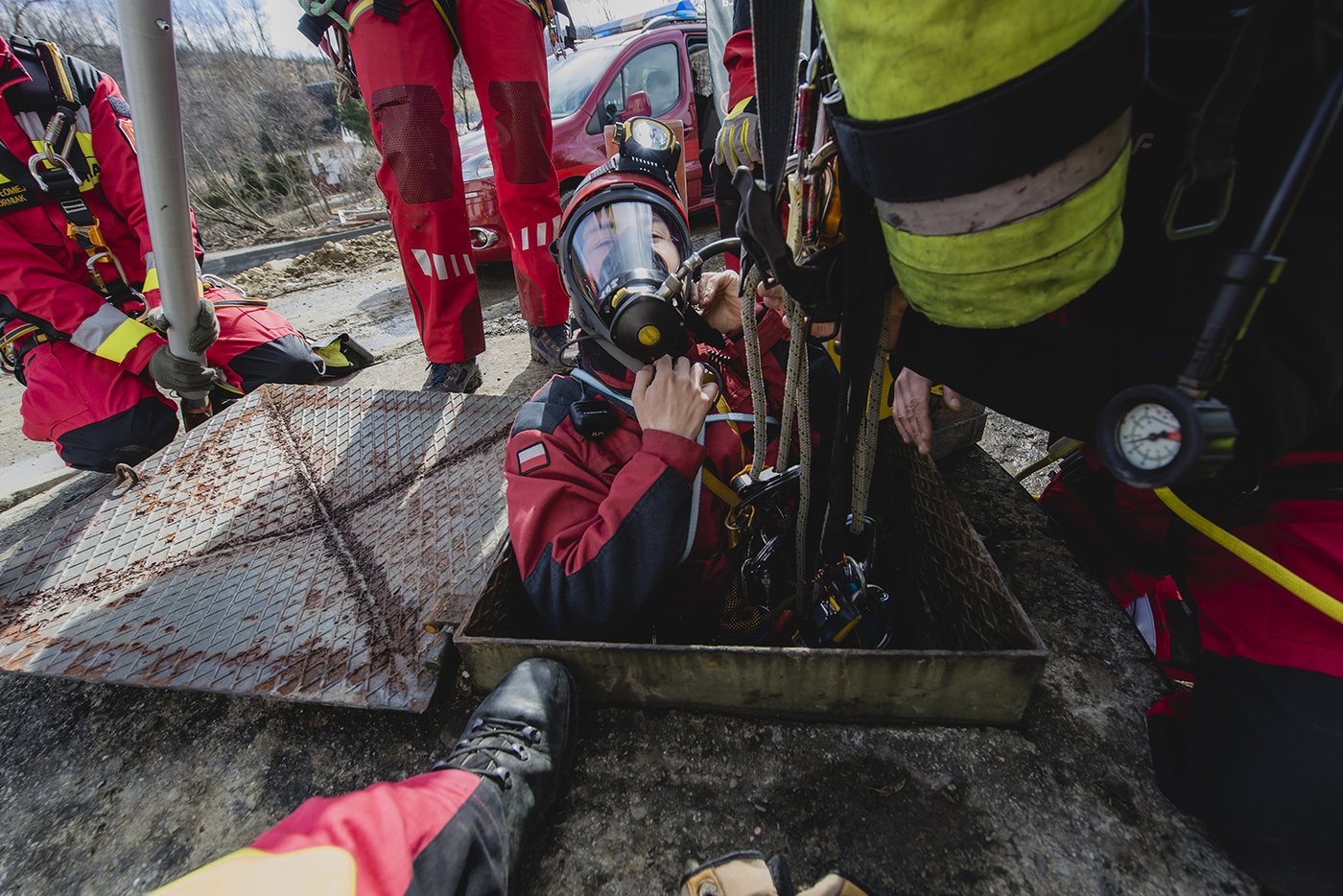
After ITRA Confined Space Rescue you can take the next step with us. On the Arizona Vortex course you learn to build artificial high anchor or redirect points, also over a hatch and inside a structure, and on the ITRA Rope Rescue course you learn team rope rescue.
Frequently asked questions
Do I need experience to start?
No. For L1 and for the L1 + L2 course you need no previous confined space rescue experience. You learn from the basics: hazards, atmospheric monitoring, equipment and the work of the person belaying.
Do I need to be a rescuer or have first aid qualifications?
No. You do not need to be a serving rescuer or hold the Polish qualified first aid certificate (KPP). In our view both help with learning and with a rescuer’s work, but they are not required.
Can I go straight to L2?
Yes, on the L1 + L2 course. The course takes 5 days including the exam: you cover the programme of both levels in the first 4 days and take the exam on the fifth day, with a separate knowledge test for each level.
When can I take L3?
When you have ITRA L1 and L2 certificates or equivalent certificates from other confined space rescue courses.
Do you go into a toxic atmosphere on the course?
No. The atmosphere during sessions is always safe, and hazards are simulated. You learn to recognise them, measure them and act as if they were real.
How does Confined Space differ from Rope Rescue?
These are two separate ITRA disciplines, with separate programmes, levels and exams. Rope Rescue is rescue on ropes on low-angle terrain, in vertical terrain and on Tyroleans. Confined Space Rescue is rescue from confined spaces, where the greatest dangers are the atmosphere and a tight entry. We run both courses.
Can I provide standby rescue after the course?
Yes. After the ITRA Confined Space Rescue course you can provide standby rescue for work in confined spaces. At L1 you belay the entry and rescue from outside, at L2 you also rescue with entry into the space, and at L3 in breathing apparatus, in an atmosphere immediately dangerous to life or health.
What does the exam look like?
On the day of the exam you complete a knowledge test in the presence of the assessor and then take the practical part. The assessor checks every element of the programme for your level: hazard recognition, atmospheric monitoring, building systems and working in the team with the casualty. The assessor is an independent ITRA assessor from outside our company.
How do I get my certificate?
Once you pass the exam, ITRA enters you in its database and sends you an electronic certificate by e-mail.
How long is the ITRA certificate valid?
3 years. To extend it, you retake the exam at your level. If you come back to us, you get a 15% discount.
Do I need my own equipment?
No. The equipment needed for the course programme is included in the price.
How does ITRA Confined Space differ from IRATA?
IRATA is industrial rope access: work on ropes and rescuing a partner from your own team. ITRA Confined Space Rescue is confined space rescue: assessing the atmosphere, entering the space and getting the casualty out through the hatch. We run both courses.
How should I prepare for the course?
Read the ITRA guidelines for your level on the ITRA website and work on your fitness. You work in protective equipment, in tight spaces, and get the casualty out with your team. For tasks in breathing apparatus, come clean-shaven where the mask seals.
What does the price include?
Instructor supervision, equipment, the exam and exam fees, and issue of the certificate.
Are there discounts?
Yes, for example when several people sign up for the same date, for serving members of the uniformed services, GOPR and TOPR mountain rescuers, paramedics, nurses and doctors, and for returning trainees. Discounts and promotions cannot be combined; the highest one applies. See the Discounts page for details.
Dates and sign-up
You will find the current dates in the calendar at the bottom of this page and on the “Sign up” page. If none of the dates suits you, choose “Find a date for us” in the sign-up form and enter the number of people and the option (L1, L2, L3 or L1 + L2). We will let you know when we plan the next edition.
Course details
L1 Responder
1 day + 1 exam day (2 days in total), PLN 2,800 per person
L2 Technician
3 days + 1 exam day (4 days in total), PLN 4,400 per person
L3 Advanced
4 days + 1 exam day (5 days in total), PLN 5,200 per person
L1 + L2
4 days + 1 exam day (5 days in total), PLN 5,200 per person
- Several people on the same date: 2 people 5%, 3 people 8%, 4 or more people 11%
- Serving members of the uniformed services, GOPR and TOPR mountain rescuers: 15%
- Paramedics, nurses and doctors: 15%
- Returning trainees: 15%
- Early booking: 10% (60 days before the course) or 15% (90 days)